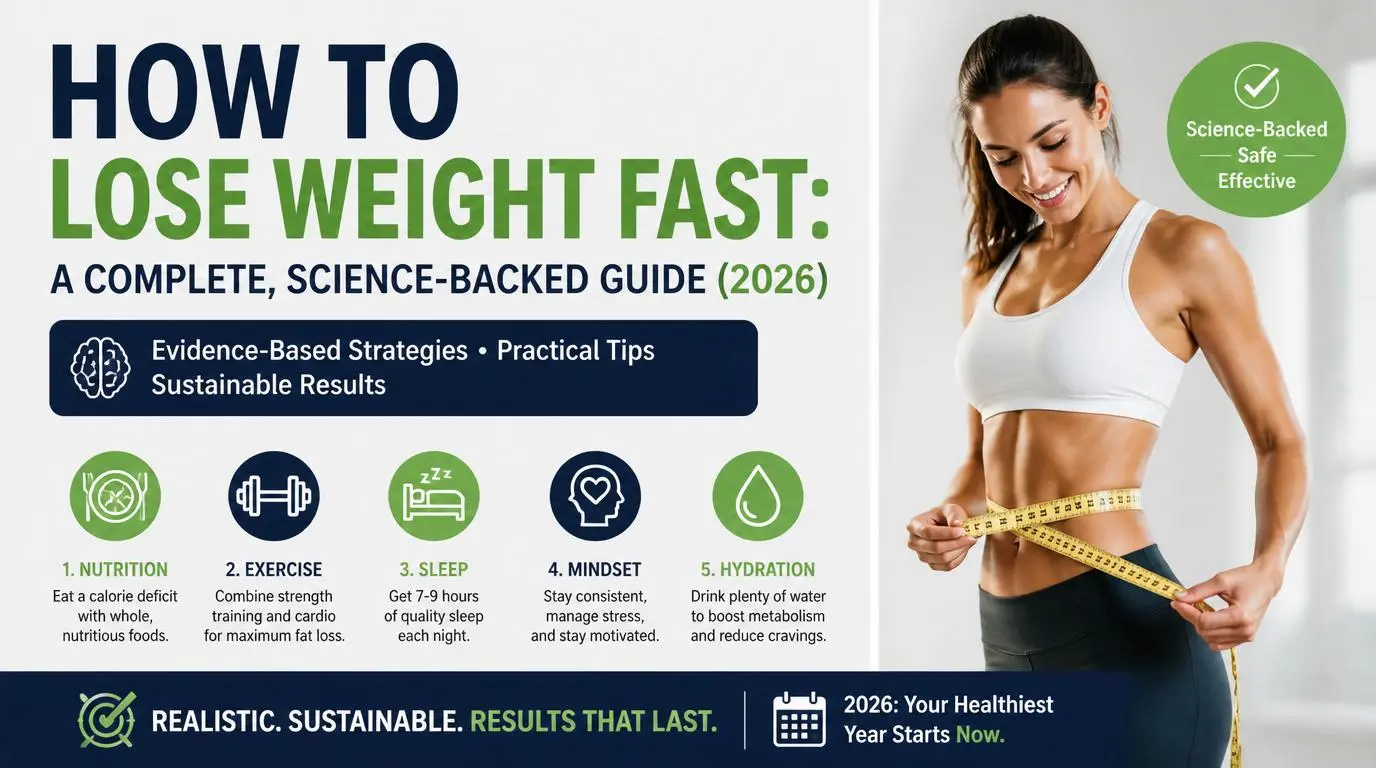
How to Lose Weight Fast: A Complete, Science-Backed Guide (2026)
Losing weight feels urgent when you’re standing in front of a mirror, counting down to a wedding, or just tired of feeling sluggish every morning. The desire to lose weight fast is one of the most searched topics in the United States — and for good reason. Most people have tried at least one diet, failed to see results in two weeks, and quit. That cycle isn’t a personal flaw. It’s the result of chasing tactics that ignore how the body actually works.
About 70% of American adults are currently overweight or obese, according to data from the National Institutes of Health, and the diet industry generates over $70 billion annually — yet obesity rates have continued climbing. That disconnect tells you something important: most weight loss advice being sold is either oversimplified or flat-out wrong. The evidence-based principles that actually produce lasting results are far less dramatic than what you’ll find on the front page of a magazine, but they’re dramatically more effective.
Over the years of working closely with people navigating weight loss — tracking real progress, observing where plans break down, and testing different approaches — a few consistent patterns emerge. The people who lose weight successfully and keep it off aren’t the ones who suffer the most. They’re the ones who understand why certain strategies work and build habits around biology, not willpower.
In this guide, you’ll find a thorough, honest breakdown of how to lose weight fast in a way that’s actually sustainable. We’ll cover calorie fundamentals, the most effective dietary approaches, exercise strategies, sleep, stress, and the psychological patterns that quietly sabotage progress. No supplements to buy, no extreme fasts to endure. Just clear, applied science — built for real life.
Understanding Weight Loss: Why the “Fast” Part Is More Nuanced Than You Think
Before diving into tactics, it’s worth calibrating what “fast” actually means in the context of healthy, sustainable weight loss. The desire to lose weight fast usually comes from an emotional place — urgency, frustration, or an upcoming event. That’s completely understandable. But fast without context leads to decisions that backfire.
A clinically meaningful and safe rate of weight loss is generally between 1 and 2 pounds per week. At that pace, someone losing 8 weeks could realistically drop 8 to 16 pounds — which is significant. The problem is that people pursuing crash diets sometimes lose 8 pounds in week one (mostly water weight and glycogen stores) and then plateau immediately, losing less than a pound per week afterward.
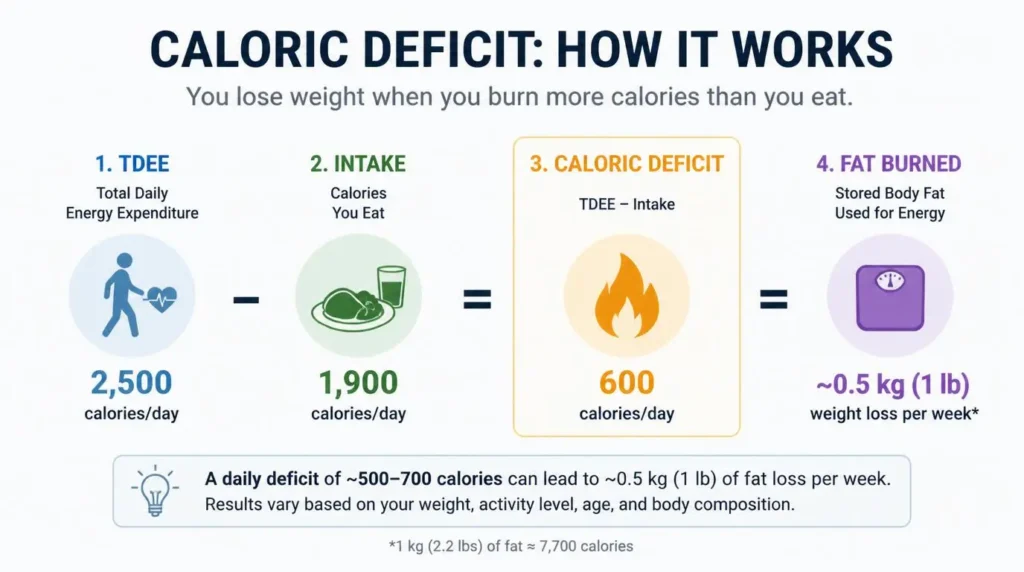
The key mechanism behind weight loss is deceptively simple: a caloric deficit. When your body burns more energy than you consume, it draws on stored fat for fuel. That’s the core of every successful approach — whether it’s keto, intermittent fasting, low-fat, or any other method. Where the approaches differ is in how they create and sustain that deficit.
💡 Tip: A deficit of 500 to 750 calories per day is the sweet spot for most people — aggressive enough to produce visible results, but not so severe that it triggers muscle loss, hormonal disruption, or rebound hunger.
The Role of Metabolism in Weight Loss
Metabolism is often blamed for slow weight loss, and while genetics do play a role, the impact is smaller than most people assume. Resting metabolic rate (RMR) — the calories your body burns at rest — is influenced by age, sex, lean muscle mass, and overall body size. A 200-pound person burns more calories doing nothing than a 150-pound person simply because they have more tissue to maintain.
What matters most for weight loss is total daily energy expenditure (TDEE), which combines your RMR with the calories burned through physical activity and digestion. Most free online calculators can estimate your TDEE within a reasonable margin. Eating 300 to 500 calories below that number daily is a practical, evidence-supported starting point.
Why Crash Diets Fail Long-Term
Extremely low-calorie diets — typically under 800 calories per day — produce rapid initial results but come with serious trade-offs. The body responds to severe restriction by lowering its metabolic rate, breaking down muscle tissue for fuel, and increasing hunger hormones like ghrelin. Within 12 to 24 months, research shows that a majority of crash dieters regain all the weight they lost, and sometimes more.
This isn’t a failure of willpower. It’s a predictable biological response to starvation signaling. Understanding this is liberating: it means the path to losing weight fast is actually about working with your body’s systems, not forcing it into panic mode.
The Most Effective Dietary Approaches for Rapid Weight Loss
Not all diets are created equal — and not all diets work equally well for every person. The best dietary approach for losing weight fast is the one you can sustain consistently for at least 8 to 12 weeks. That said, certain frameworks have a strong evidence base and tend to produce faster initial results for most people.
High-Protein Diets
Protein is the most powerful macronutrient for weight loss, and it works through three mechanisms simultaneously. First, it has the highest thermic effect of food — your body burns roughly 20 to 30% of protein calories just in the process of digesting them. Second, protein is the most satiating macronutrient, meaning higher protein intake consistently reduces overall calorie consumption without conscious restriction. Third, adequate protein intake preserves lean muscle mass during a caloric deficit, which keeps your metabolism from declining as sharply.
Practical target: aim for 0.7 to 1 gram of protein per pound of body weight per day. For a 170-pound person, that’s 119 to 170 grams of protein daily. Good sources include:
- Chicken breast, turkey, and lean beef
- Eggs and egg whites
- Greek yogurt and cottage cheese
- Salmon and tuna
- Legumes (lentils, chickpeas, black beans)
- Tofu and tempeh for plant-based eaters
Low-Carb and Ketogenic Diets
Low-carbohydrate diets consistently outperform low-fat diets in short-term weight loss trials — often by a significant margin in the first 3 to 6 months. The reason is partly water weight (each gram of glycogen stored in muscle is bound to about 3 grams of water, so depleting glycogen produces rapid initial weight loss), but also because reducing carbs tends to lower insulin levels, which facilitates fat burning.
The ketogenic diet takes this further, restricting carbs to under 50 grams per day to induce ketosis — a metabolic state where the body burns fat for fuel instead of glucose. Some people lose weight faster on keto than any other approach. Others find it difficult to sustain socially or experience fatigue during the adaptation phase (often called “keto flu”) in the first 1 to 2 weeks.
A moderate low-carb approach — keeping carbs under 100 to 150 grams per day, focusing on vegetables, legumes, and minimal refined grains — captures most of the benefit without the strictness of full keto.
Intermittent Fasting
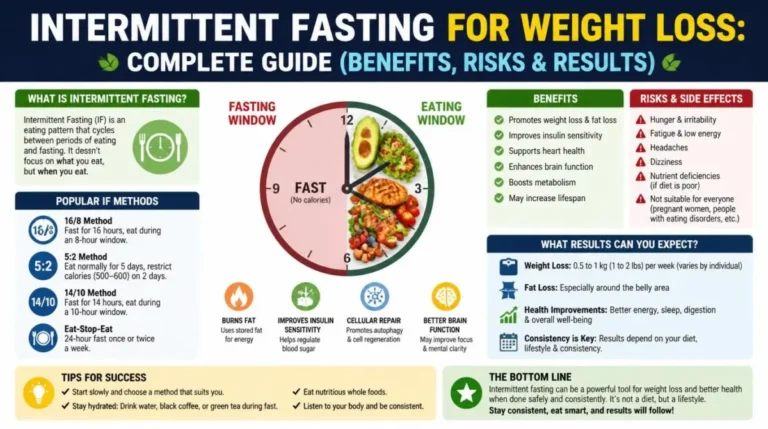
Intermittent fasting (IF) isn’t about what you eat as much as when you eat. The most studied and practical protocol is the 16:8 method — eating within an 8-hour window and fasting for 16 hours (which includes sleep). A common version: eat between 12 PM and 8 PM, skipping breakfast.
IF works for weight loss primarily because it naturally reduces overall calorie intake. Most people don’t compensate for the skipped meal by overeating during their eating window. It also improves insulin sensitivity, which helps with fat burning over time.
| Dietary Approach | Typical 8-Week Loss | Difficulty | Best For |
|---|---|---|---|
| High-Protein Diet | 8–14 lbs | Low–Medium | Most people |
| Low-Carb (moderate) | 10–16 lbs | Medium | People who love savory food |
| Ketogenic | 12–20 lbs | High | Highly motivated, no social constraints |
| Intermittent Fasting | 7–12 lbs | Medium | People who skip breakfast naturally |
| Mediterranean Diet | 6–10 lbs | Low | Long-term adherence, heart health |
⚠️ Note: Weight loss estimates above depend on starting weight, calorie intake, and individual factors. Heavier individuals tend to lose more weight in the initial weeks. These figures represent realistic ranges, not guarantees.
Building Your Calorie Deficit Without Constant Counting
For many people, tracking every calorie in a food diary is sustainable for about two weeks before it becomes exhausting. The good news: you don’t need to obsessively count calories to maintain a deficit. There are structural eating strategies that create a deficit almost automatically.
Volume Eating: The Strategy of Eating More to Eat Less
Foods with high water and fiber content provide a large volume of food for relatively few calories. A large salad with vegetables, lean protein, and a light dressing might weigh 600 grams and contain only 350 calories. A small bag of trail mix weighs 50 grams and contains 250 calories. Same calorie difference, entirely different fullness experience.
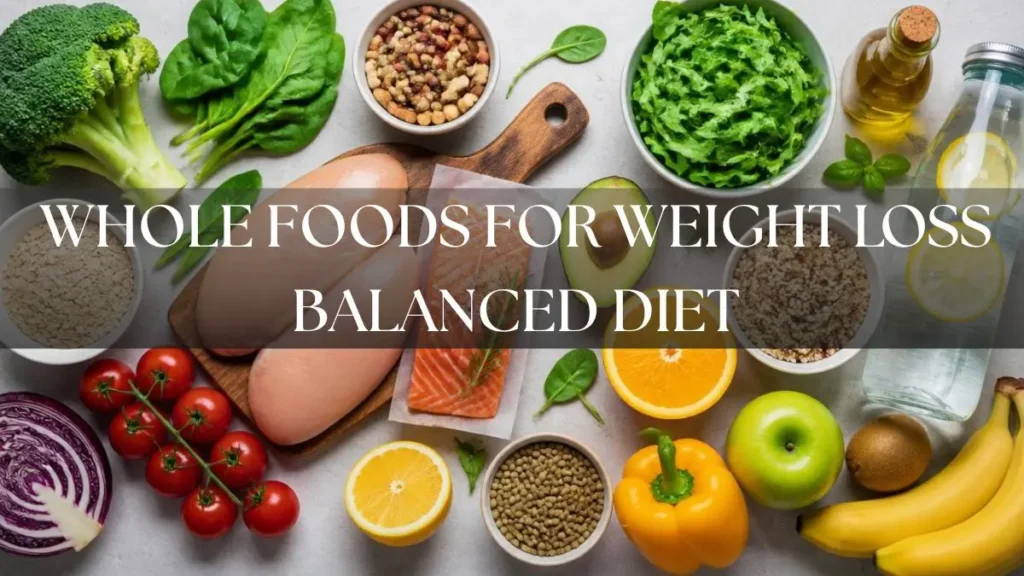
Prioritizing vegetables (especially non-starchy ones like leafy greens, broccoli, peppers, and zucchini), fruits, lean proteins, and broth-based soups fills you up while naturally keeping calorie intake lower.
The Plate Method
A simple, no-tracking framework: fill half your plate with non-starchy vegetables, one-quarter with lean protein, and one-quarter with whole grains or starchy vegetables. This structure, used widely in clinical nutrition programs, consistently produces a moderate caloric deficit without any math.
Eliminating Liquid Calories
Liquid calories are one of the most significant and underappreciated contributors to excess calorie intake. A 20-ounce regular soda contains about 240 calories. A large frappuccino-style coffee drink can exceed 500 calories. Fruit juice — often perceived as healthy — delivers roughly the same sugar as soda with little to no fiber. Alcohol adds 7 calories per gram, more than carbohydrates or protein.
Switching to water, black coffee, unsweetened tea, or sparkling water eliminates hundreds of daily calories for most people without changing a single meal.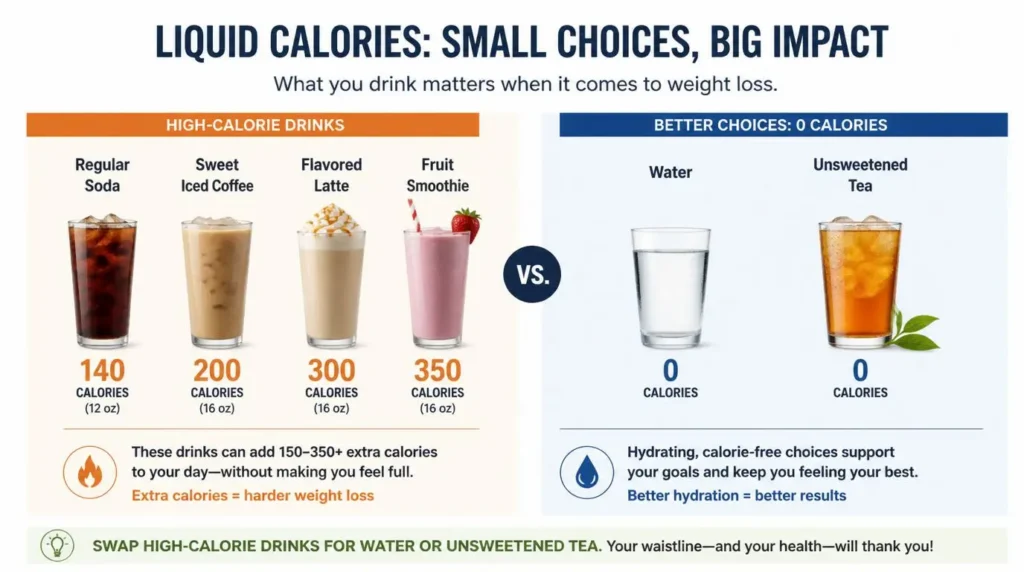
Exercise Strategies That Accelerate Weight Loss
Diet creates the deficit; exercise amplifies it and preserves muscle. The most important thing about exercise for weight loss is consistency over intensity. A 30-minute walk done every day for a year will produce dramatically better results than an aggressive 6-day gym program abandoned after 3 weeks.
Strength Training: The Non-Negotiable
If you could only choose one type of exercise to support weight loss, strength training would be the most rational choice. Here’s why: every pound of lean muscle you build increases your resting metabolic rate. Muscle tissue is metabolically expensive — it burns calories around the clock, not just during exercise. By contrast, cardio burns calories during the workout, but has a limited effect on resting metabolism.
Additionally, when you’re in a caloric deficit, strength training signals your body to preserve muscle rather than break it down for energy. Without resistance exercise, roughly 25% of weight lost in a caloric deficit can come from lean tissue — lowering your metabolic rate and making maintenance harder.
A practical beginner-to-intermediate program: 3 sessions per week, 45 to 60 minutes each, focusing on compound movements (squats, deadlifts, rows, presses, lunges). You don’t need a gym — resistance bands and bodyweight training are effective starters.
Cardio for Calorie Burn
Cardiovascular exercise is valuable for creating additional caloric burn and improving cardiovascular health. The most sustainable form is low-to-moderate intensity steady-state cardio (LISS) — walking, cycling, swimming, or using an elliptical at a moderate pace for 30 to 60 minutes.
High-intensity interval training (HIIT) burns more calories in less time and produces an “afterburn” effect (excess post-exercise oxygen consumption, or EPOC) that keeps metabolism slightly elevated for hours post-workout. However, HIIT is taxing on the body and can interfere with recovery if done too frequently alongside strength training.
A balanced weekly approach might look like:
- Monday: Strength training (lower body focus)
- Tuesday: 30–45 minutes brisk walking or light cycling
- Wednesday: Strength training (upper body focus)
- Thursday: Active rest (yoga, stretching, casual walk)
- Friday: Full-body strength training or HIIT (20–25 minutes)
- Saturday: Longer cardio session (45–60 minutes hiking, cycling, swimming)
- Sunday: Rest or very light activity
Non-Exercise Activity Thermogenesis (NEAT)
NEAT is the energy burned through all movement that isn’t formal exercise — walking to the car, taking stairs, fidgeting, doing household chores. For many people, NEAT accounts for more daily calorie burn than structured workouts. Research suggests that naturally lean people tend to move significantly more throughout the day, even when sedentary jobs are accounted for.
Practical ways to increase NEAT: take the stairs, park farther away, stand while working, take 5-minute walks every hour at a desk job, and pace during phone calls. These small habits collectively burn an additional 200 to 400 calories per day for many people.

Sleep, Stress, and the Hidden Factors Undermining Your Progress
Two of the most consistent predictors of weight loss failure have nothing to do with diet or exercise: sleep deprivation and chronic stress. Both are profoundly underestimated by most people pursuing weight loss.
Why Sleep Is a Weight Loss Tool
Getting fewer than 7 hours of sleep per night reliably increases hunger the following day. The mechanism is hormonal: sleep deprivation raises ghrelin (the hunger hormone) and suppresses leptin (the satiety hormone). People who sleep 5 to 6 hours per night report significantly higher food cravings — particularly for high-calorie, high-sugar foods — than those who sleep 7 to 9 hours.
In a landmark Stanford study, participants restricted to 5.5 hours of sleep per night consumed nearly 500 additional calories per day compared to when they slept 8.5 hours. Over a week, that’s 3,500 extra calories — an entire pound of fat. Sleep isn’t passive recovery. It’s an active metabolic regulator.
Practical sleep hygiene for weight loss: consistent sleep and wake times (even on weekends), a cool and dark bedroom, no screens in the 30 minutes before bed, and limiting caffeine after 2 PM.
Cortisol and Stress-Driven Eating
Chronic psychological stress elevates cortisol, a hormone that increases appetite, drives cravings for calorie-dense comfort foods, and promotes fat storage — particularly in the abdominal region. This is why people under sustained stress often gain weight even when they believe they’re eating normally.
Stress also triggers emotional eating, one of the most common behavioral barriers to weight loss. Recognizing the difference between physical hunger (gradual onset, satisfied by any food) and emotional hunger (sudden onset, craving specific comfort foods) is an important skill for anyone trying to lose weight.
💡 Tip: A simple rule when stress triggers eating: drink a glass of water, wait 10 minutes, and ask whether you’re actually hungry. In practice, this one pause eliminates a significant portion of stress-driven snacking for many people.
Behavioral Patterns and Mindset: The Psychology of Sustainable Weight Loss
The physical side of weight loss is well-understood. The behavioral side is where most people struggle. Addressing mindset isn’t about motivation — motivation is unreliable. It’s about designing your environment and habits so that good decisions require less effort.
Identity-Based Habit Formation
Research on habit change consistently shows that people who frame their goals around identity rather than outcomes are more successful long-term. “I’m someone who exercises regularly” is a more durable commitment than “I need to lose 20 pounds.” The first shapes daily decisions across contexts; the second expires the moment the scale stalls.
Starting small is underrated. Committing to a 10-minute walk every day is more valuable than committing to a 60-minute gym session three times a week — because the 10-minute walk will actually happen consistently. Consistency across months matters far more than intensity in any single session.
Environment Design
Willpower is a limited resource. Relying on it repeatedly throughout the day — to avoid junk food at home, to choose salad over fries, to resist late-night snacking — depletes it. The solution isn’t stronger willpower. It’s removing the need to exercise it constantly.
Practical environment design for weight loss:
- Keep fruit, cut vegetables, and Greek yogurt at eye level in the refrigerator
- Remove ultra-processed snacks from the house entirely (you can’t eat what isn’t there)
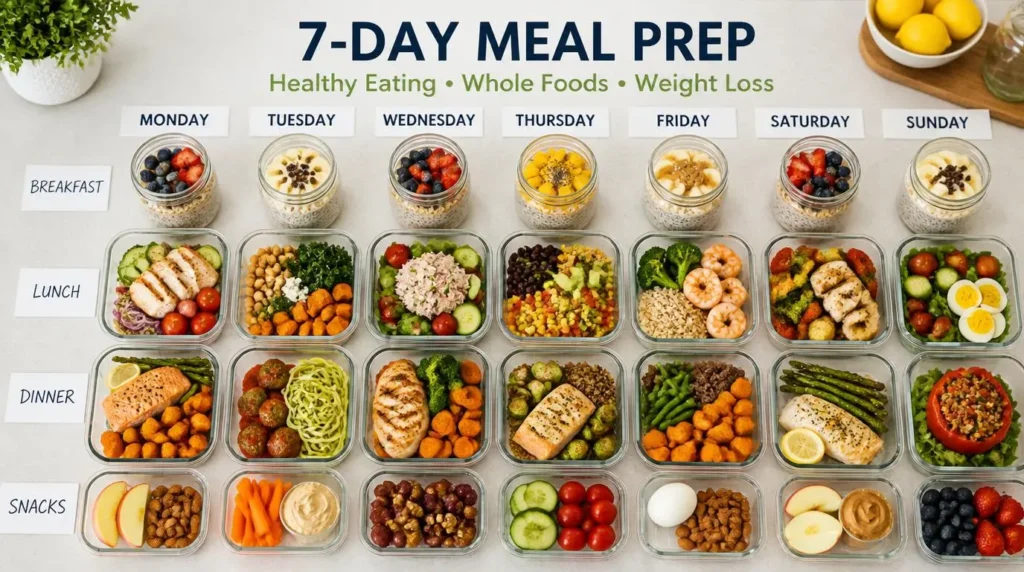
- Prepare meals in advance so healthy options are always the easiest choice
- Put workout clothes out the night before
- Log food or track meals in the morning before eating, not after
Dealing With Plateaus
Weight loss plateaus — periods of 2 to 3 weeks where the scale doesn’t move despite consistent effort — are not failures. They’re physiological adaptations. When you lose weight, your body requires fewer calories to function (because it’s smaller), and it may also slightly reduce activity levels as a compensation mechanism.
The appropriate response to a plateau is not panic or extreme restriction. Practical adjustments include recalculating TDEE based on current weight, adding 20 to 30 minutes of additional walking per week, auditing portion sizes (portion creep is common after several weeks), or cycling calorie intake (a slightly higher intake day every 7 to 10 days can reset hunger hormones temporarily).
Practical Week One: A Realistic Fast-Start Plan
The first week of a structured weight loss effort typically produces the fastest results — largely due to water weight loss as glycogen stores deplete. It’s motivating, but also easy to misinterpret. Here’s a grounded fast-start approach:
Calorie target: Estimate your TDEE using an online calculator, then subtract 500 calories.
Meals structure:
- Breakfast: High-protein (eggs, Greek yogurt with berries, cottage cheese)
- Lunch: Large salad with 5–6 oz lean protein, olive oil and vinegar dressing
- Dinner: Lean protein + roasted vegetables + small portion of rice, potato, or legume
- Snacks if needed: apple + tablespoon of almond butter, handful of edamame, hard-boiled egg
Movement: 20–30 minute walk every morning, 2 strength training sessions
Hydration: Aim for half your body weight in ounces of water per day (a 180-pound person targets 90 oz)
Expected result: 3 to 6 pounds in week one for most people (includes water weight). Subsequent weeks will average 1 to 2 pounds.
Common Mistakes That Slow Down Weight Loss
Even well-intentioned people make errors that quietly stall progress. Recognizing them early saves weeks of frustration.
Underestimating calories: Restaurant meals, cooking oils, sauces, and dressings often contain far more calories than people estimate. A tablespoon of olive oil is 120 calories. A restaurant portion of pasta can be 3 to 4 times what you’d serve at home. Using a food scale for a few weeks, even briefly, builds accurate intuition about portions.
Exercising more and eating more: Many people unconsciously compensate for exercise by eating more — sometimes eating back more calories than the workout burned. The “I earned it” mindset after a workout is one of the most common patterns in people who exercise regularly but don’t lose weight.
All-or-nothing thinking: One off-track meal isn’t a failure. The problem is treating it as one — abandoning the plan entirely after a bad day rather than resuming normally at the next meal. Progress happens over weeks and months, not individual meals.
Not eating enough protein: This is the single most common nutritional error in weight loss. Without sufficient protein, muscle loss during a deficit is significant, hunger is harder to control, and metabolic adaptation is more severe.
Overrelying on “diet” or “health” foods: Low-fat yogurt with fruit at the bottom, protein bars, smoothies, and “healthy” granola often contain substantial amounts of sugar and more calories than people assume. Whole foods with minimal processing are more reliably satisfying and calorie-efficient.
Conclusion
Losing weight fast — truly and sustainably — comes down to a small number of principles applied consistently over time. A moderate caloric deficit built through whole foods and adequate protein. Strength training to preserve muscle and elevate metabolism. Enough sleep and stress management to keep hunger hormones regulated. And an honest look at behavioral patterns that quietly undermine progress.
None of this requires extreme suffering or expensive supplements. The most effective weight loss plans are the ones people actually follow — which means they have to fit real life, not a magazine fantasy. Start with one or two changes this week: swap liquid calories for water, add a daily walk, and eat protein at every meal. Those three moves alone shift the trajectory for most people.
Weight loss is a process with setbacks built in. The scale will stall, a bad week will happen, and motivation will dip. That’s normal. What matters is returning to the fundamentals quickly rather than quitting. Save this guide, come back to it when you need recalibration, and share it with someone else who’s trying to figure it out.
Your body is responsive. With the right framework, it will cooperate.
Frequently Asked Questions – How to Lose Weight Fast
How quickly can I realistically lose weight fast without losing muscle?
A safe and effective rate is 1 to 2 pounds per week for most people. In the first week, you may lose 3 to 6 pounds due to water weight and glycogen depletion. After that, consistent weight loss of 4 to 8 pounds per month is both achievable and protective of lean muscle — especially if you’re eating sufficient protein (0.7–1g per pound of body weight) and incorporating strength training at least twice a week.
What is the best diet to lose weight fast for someone who doesn’t like vegetables?
A high-protein diet is often the most accessible option for people who don’t enjoy vegetables. Focusing on lean proteins, dairy, and low-glycemic fruits while reducing refined carbs and sugar produces meaningful weight loss even without a heavy vegetable intake. Building in small additions over time — a handful of spinach in scrambled eggs, tomatoes in a wrap — tends to work better than a complete dietary overhaul all at once.
Can I lose weight fast without exercising?
Yes — diet alone can create the caloric deficit needed for significant weight loss. In fact, nutrition accounts for approximately 80% of weight loss results for most people. However, exercise (especially strength training) preserves muscle mass, improves mood and energy, and makes long-term maintenance significantly easier. If you’re starting from zero, daily walking is an excellent, low-barrier starting point that supports both weight loss and metabolic health.
Why am I not losing weight even though I’m eating less?
Several factors can stall progress despite reduced eating: underestimating calorie intake (restaurant portions, cooking oils, and sauces are common culprits), metabolic adaptation after several weeks of dieting, inadequate sleep raising hunger hormones, or chronic stress elevating cortisol. It’s also worth recalculating your calorie target — as you lose weight, your body requires fewer calories, so what worked initially may no longer create a deficit. A two-week food diary using a tracking app often reveals the hidden calories most people miss.
Is intermittent fasting effective for losing weight fast?
Intermittent fasting can be highly effective — primarily because it naturally reduces total calorie intake for most people by eliminating one or two eating occasions. The 16:8 protocol (eating within an 8-hour window) is the most studied and practical starting point. Research shows it produces comparable results to continuous calorie restriction over 8 to 12 weeks. Its biggest advantage is simplicity: instead of tracking every meal, you simply stop eating after a certain time. It works best for people who aren’t very hungry in the mornings and can manage energy during the fasting window.
What’s the fastest way to lose belly fat specifically?
Não existe um método específico para eliminar gordura abdominal — a redução localizada de gordura é um mito persistente. No entanto, a gordura abdominal (gordura visceral, que envolve os órgãos internos) tende a responder bem à perda de peso geral, principalmente a abordagens que reduzem os níveis de insulina, como dietas com baixo teor de carboidratos e jejum intermitente. Treinamento intervalado de alta intensidade e treinamento de força consistente também reduzem preferencialmente a gordura visceral ao longo do tempo. Reduzir o consumo de álcool e controlar o estresse crônico (que eleva o cortisol e promove o armazenamento de gordura abdominal) são duas estratégias subestimadas, mas altamente eficazes.
Como faço para manter o peso perdido depois de emagrecê-lo?
A manutenção do peso é uma habilidade diferente da perda de peso, mas ambas abordam os mesmos fundamentos: ingestão consistente de proteínas, atividade física regular e padrões alimentares estruturados. Pesquisas do Registro Nacional de Controle de Peso — que acompanham milhares de pessoas que conseguem manter uma perda de peso significativa — mostram que a maioria mantém exercícios regulares (em média, cerca de uma hora por dia de atividade moderada), toma café da manhã regularmente, pesa-se com frequência para detectar pequenos ganhos de peso precocemente e mantém um padrão alimentar moderadamente estruturado, em vez de retornar a uma alimentação irrestrita.
⚠️ Aviso importante: Este artigo tem caráter meramente informativo e educativo. As informações aqui contidas não substituem a orientação de um médico qualificado, nutricionista ou profissional de saúde licenciado. Antes de iniciar qualquer mudança significativa na dieta ou no programa de perda de peso — especialmente se você tiver problemas de saúde pré-existentes, tomar medicamentos ou tiver um histórico de transtornos alimentares — consulte um profissional de saúde qualificado. Os resultados individuais variam de acordo com diversos fatores, incluindo idade, sexo, estado de saúde e adesão ao programa.